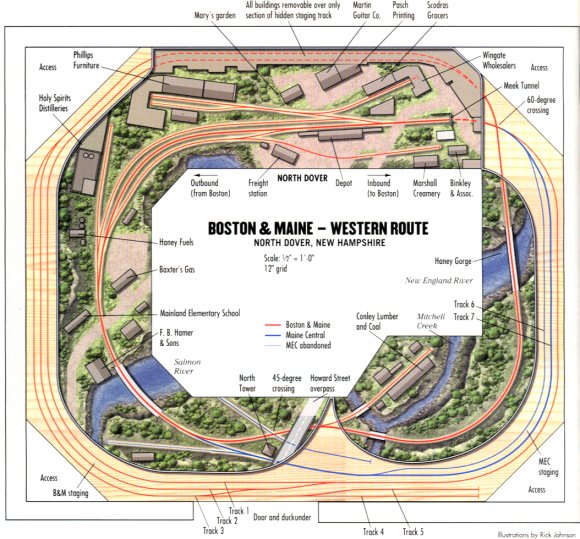
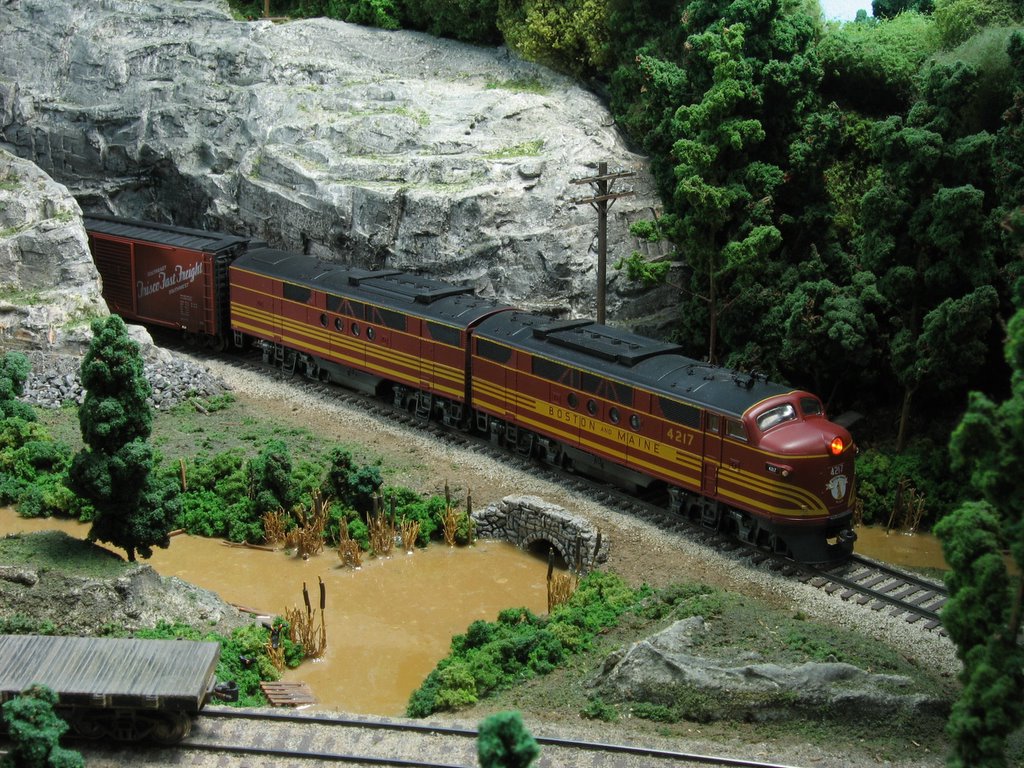
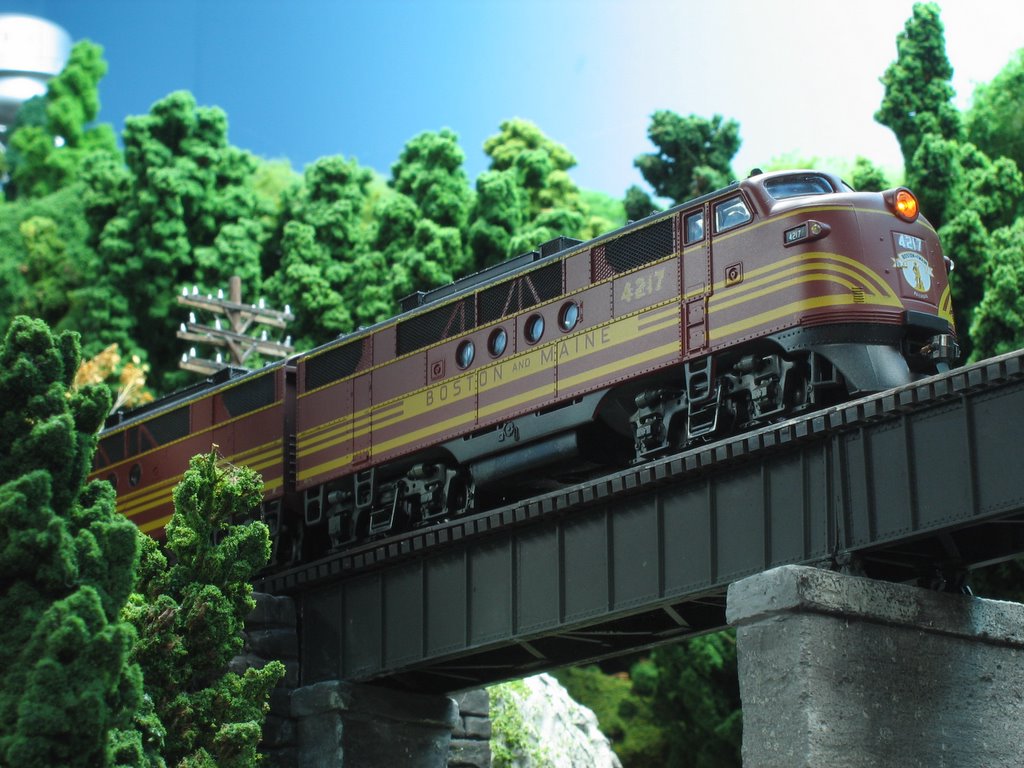
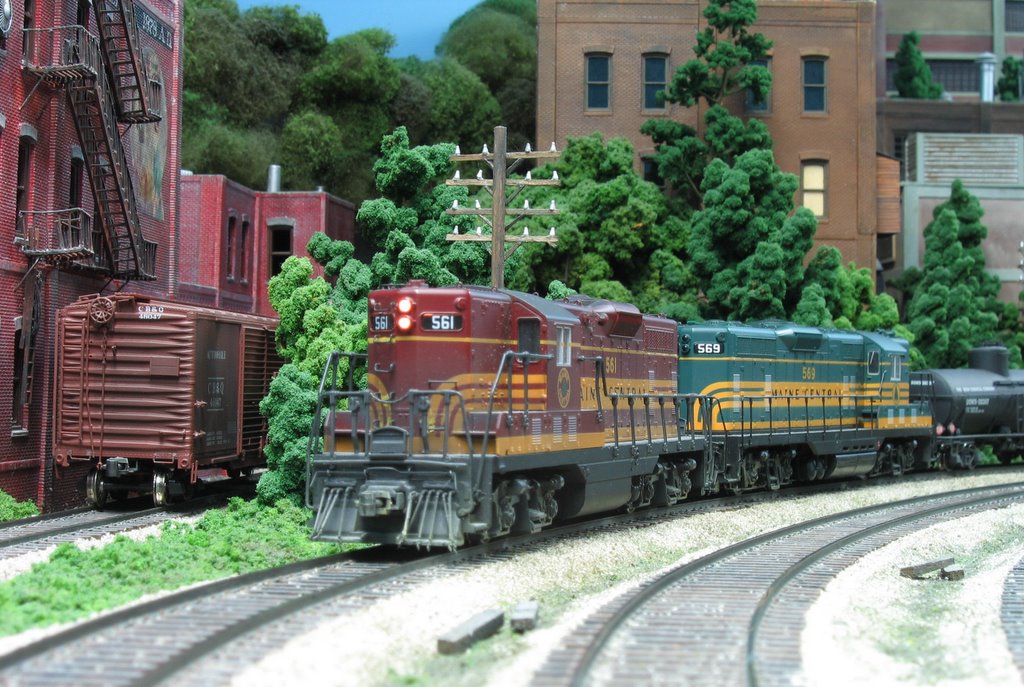
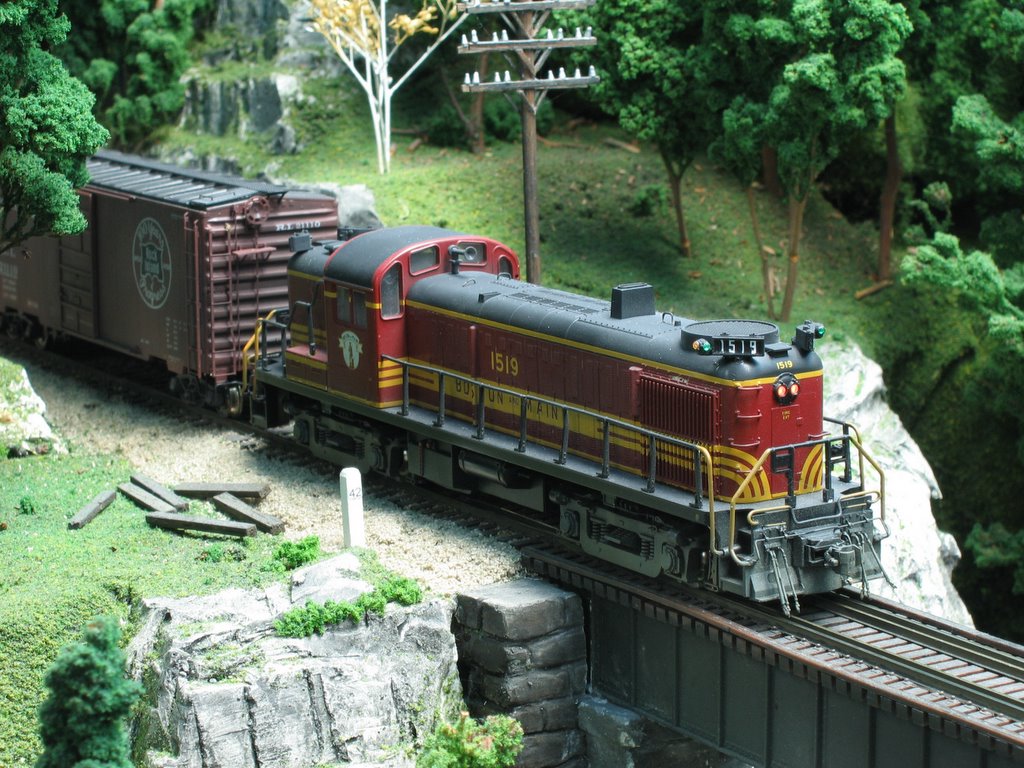
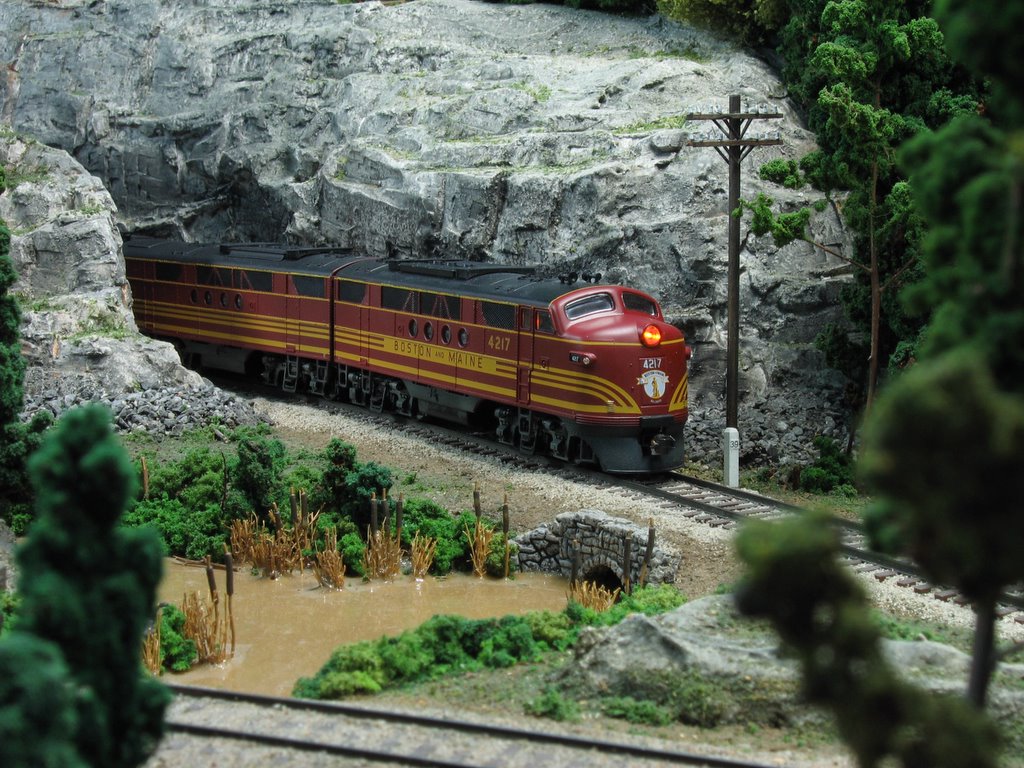
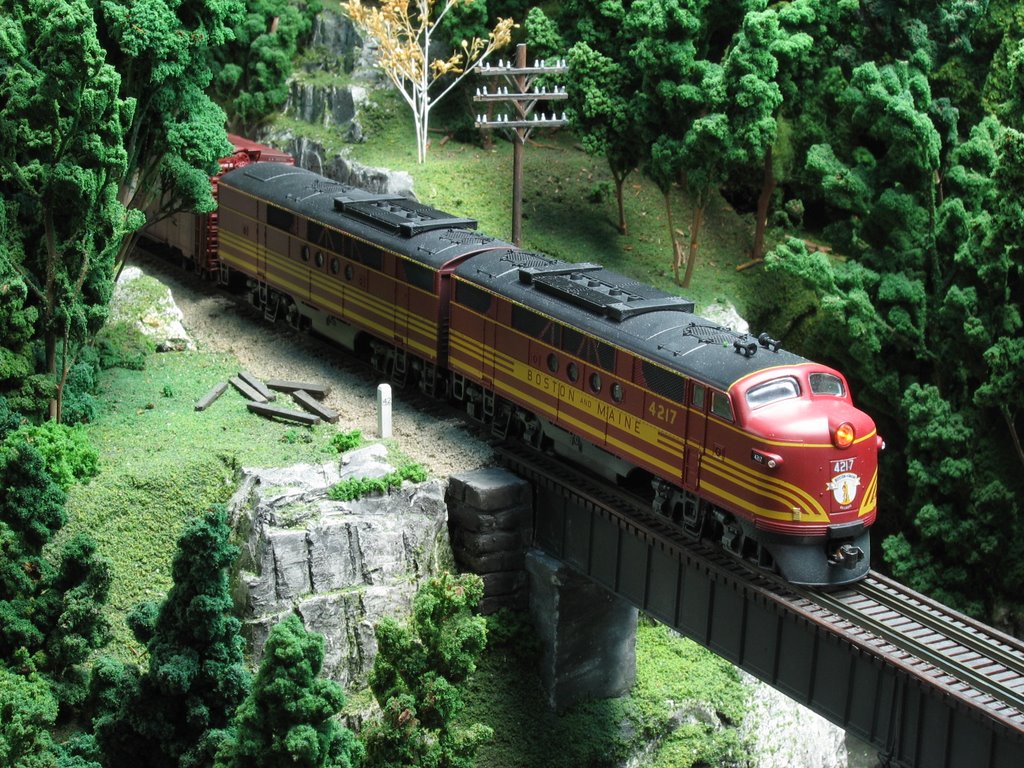
The staging tracks for my B&M/MEC model railroad surround the layout within the four walls of the room. There are three openings where staged trains enter the visible portion of the layout. Much has been written about effectively masking these openings to staging, and, if done properly, visitors will hardly notice that staging tracks exist! Alongside each picture I will explain in detail how I masked the entrances to staging on my layout.
 The first image showcases the northerly access area for inbound trains. This portal area to staging is effectively hidden behind a long rock cut and a large stand of trees. The trains enter the layout through Haney Cut and immediately traverse the New England River Bridge in the state of Maine. Today we see a B&M rail diesel car exiting the cut.
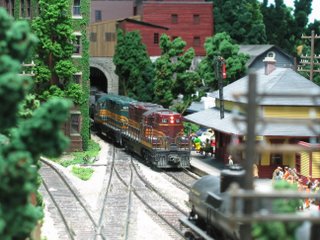 B&M tracks traverse the entire layout where they exit at the southerly portal, a tunnel located underneath the upper main street of North Dover. I call my town North Dover to give me artistic license to bring some of my favourite scenes from around New England to the layout, one of them being the famous tunnel at Bellows Falls. This scene is masked by a tall cliff, some buildings and a creamery located in the town. On this day we spot a Maine Central unit tank train exiting the tunnel in town. The MEC is granted trackage rights for a short portion of the B&M line through North Dover for interchange purposes.
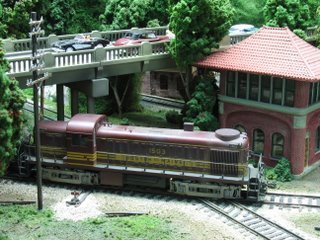 The Maine Central's sole independent access from staging takes place halfway around the layout at the Howard Street Overpass where a tower guards the interlocking. A combination of elements work here to mask the Maine Central's portal including the tower, the overpass and some groupings of trees.
 The image we see here is of B&M RS2 #1503 pulling a short local into town. The highway overpass certainly appears crowded today!
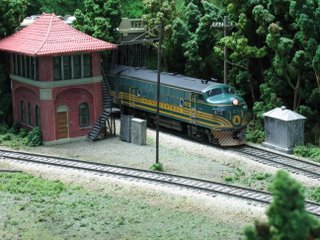
The last image demonstrates just how effectively the tower, overpass and trees work to mask the portal to staging at this location. That Maine Central train #391 "The Oil Can" await clearance to enter B&M trackage.
Yes, if done properly, visitors will never know what's coming next onto your layout. Indeed, each train will be a surprise!
Cheers, Mike
Visit my other weblog www.fridaynightgroup.blogspot.com where you can see what my round robin group does each Friday night!
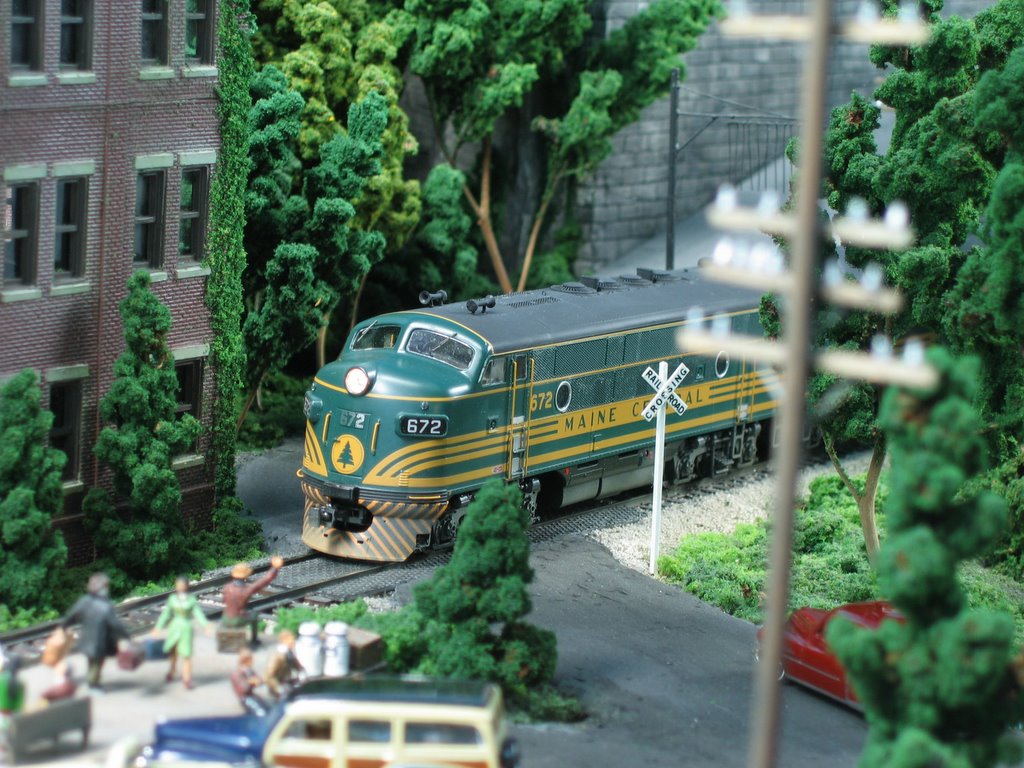
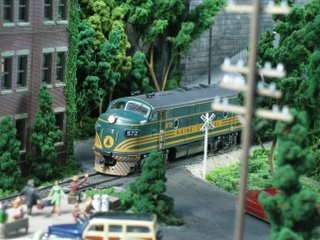 My HO scale B&M Railroad interchanges with its New England cousin, the Maine Central, which has been granted trackage rights into the town of North Dover. Two pairs of Maine Central trains traverse these B&M tracks daily, train #561/562 "The Oil Can" and train#591/592, a mixed freight. The images you see today were taken on many of my railfanning excursions around North Dover. I've selected my favourite Maine Central diesel to showcase, the 672, an EMD F2.
The first image (above) shows F2 AB set #672 arriving town outbound. The train has just exited the tunnel under the main street of town. It will lift loaded tanker traffic in North Dover destined for the many paper mills located in the interior of the state of Maine. This train, train # 562, has been nicknamed "The Oil Can" by local railfans.
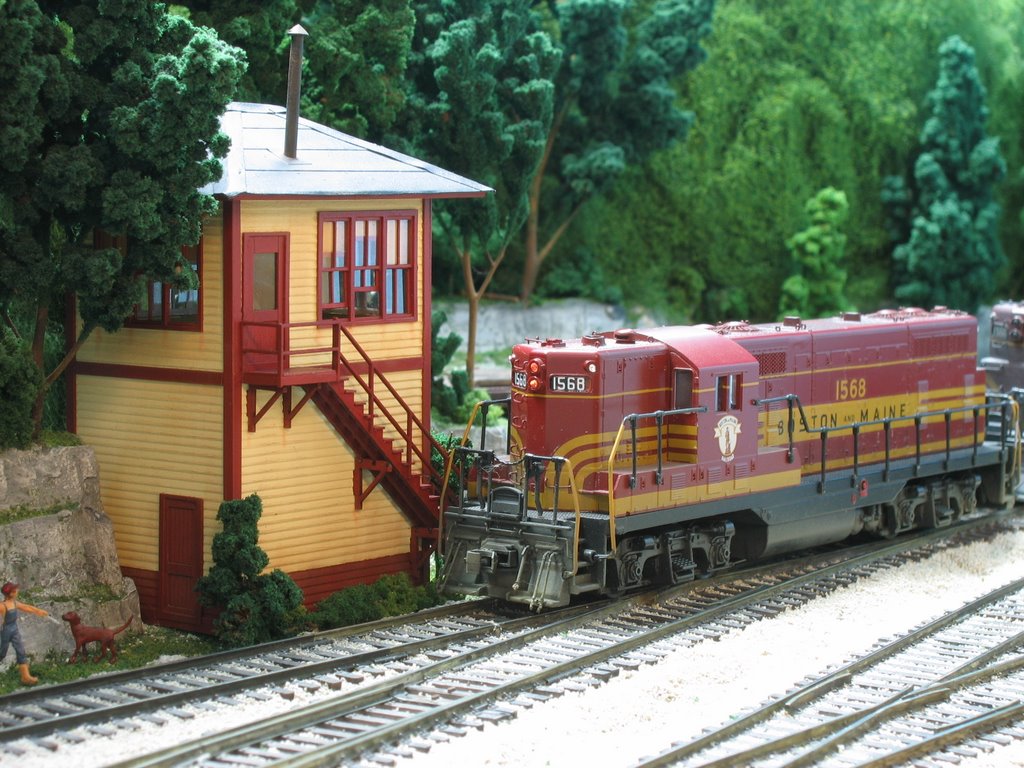
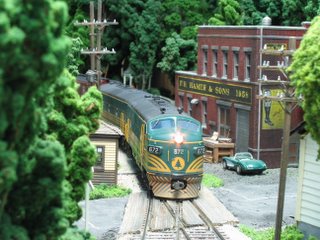 The second image taken a few months later shows the same units in care of an inbound mixed freight, train # 591. I managed to capture the units passing the FB Hamer building at the Boundary Rd. crossing on the outskirts of North Dover. The train is entering yard limits where it will perform its drops and lifts. Note the B&M shanty protecting the road crossing.
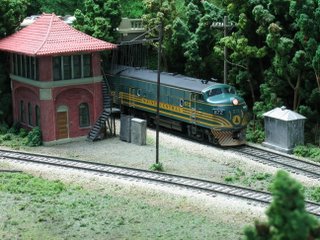 The third image captures the Maine Central train holding the interlocking in anticipation of a meet with a Boston and Maine train. It has just left staging and entered the visible portion of the layout. The interlocking tower and the highway overpass serve to mask the portal opening from the staging area!
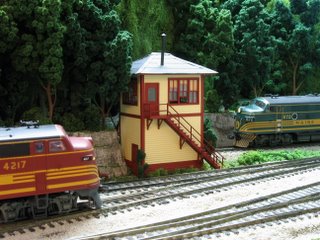 The final image shows a different meet...this time in staging. This is the area near the duckunder at the entrance of the train room. The Maine Central train will pass behind the tower and enter the scenicked portion of the layout underneath a highway overpass and behind another interlocking tower (see previous image). The juxtaposition of these two cowl-bodied beauties really makes for a great photograph!
F-units have always captured my fancy. It continues to amaze me how the engineers of the day created those beautiful rounded edges on the front body of the unit. Indeed, when I built my layout, I had to have a few of these "beauties" on the roster!
Cheers, Mike Hamer
Check out my other weblog which details my train operating round robin group at www.fridaynightgroup.blogspot.com
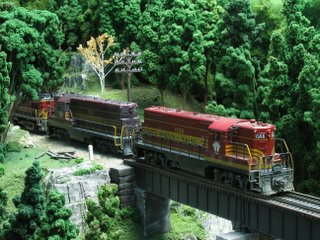 Railfans around North Dover and environs were on their telephones hustling groups of friends trackside when they got wind of two unusual cars in the consist of train PM6 that would arrive town shortly...sometime within the half hour.
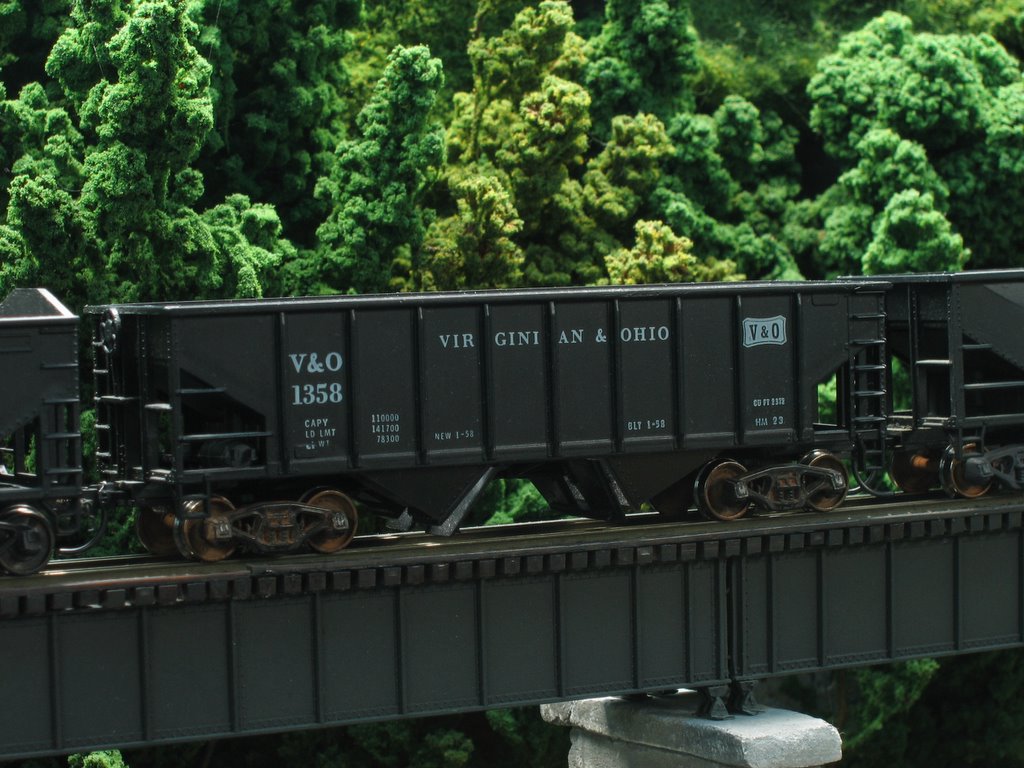
Mike Hamer received the call from his railfanning buddy, Theo van Vliet. Theo was down at the station and overheard the stationmaster say that train PM6, a hotshot freight from Portland to Mechanicville had in its consist a long cut of hopper cars which contained two rather distinct "specimens" in the block.
When Hamer heard the origin of the two unique hoppers, he quickly grabbed his camera and headed out the door to his car, a brand new black and white '58 Chevy.
 "Theo", Hamer shouted over the phone. "How about you stay in town near the station and yard tracks and I'll hustle out to the New England River Bridge. What time did the train depart Rigby Yard?"
"No need to worry," Theo responded. "He left Rigby a while back and the stationmaster here tells us he should be a good 20 minutes out. You should just have enough time to make it."
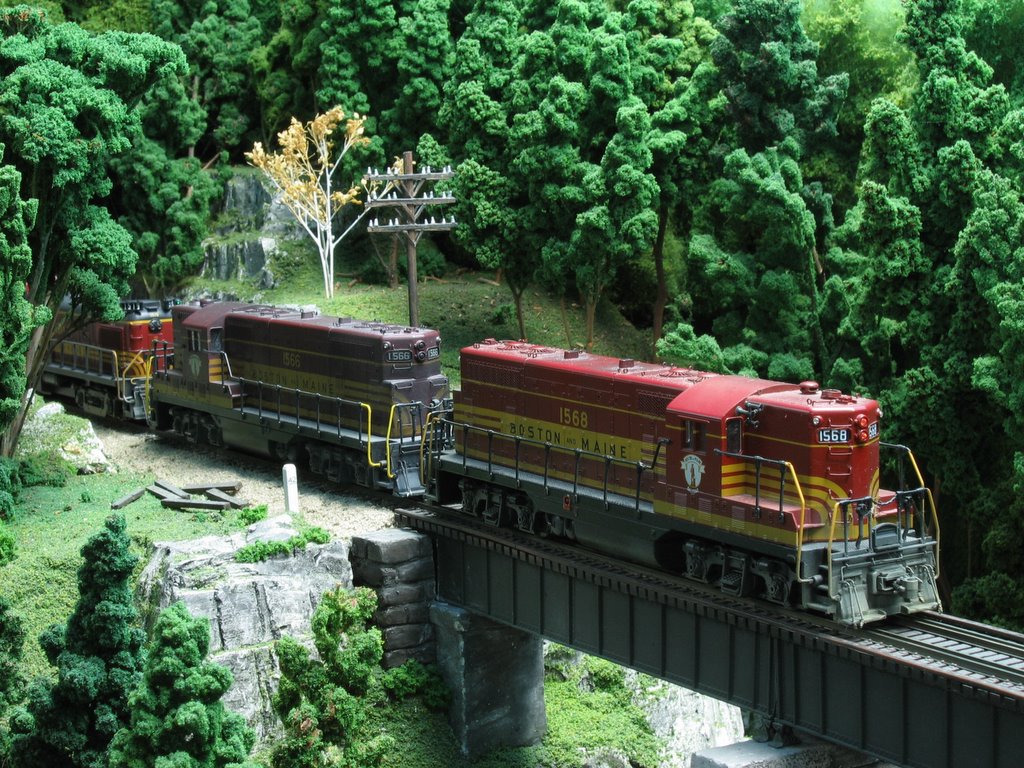
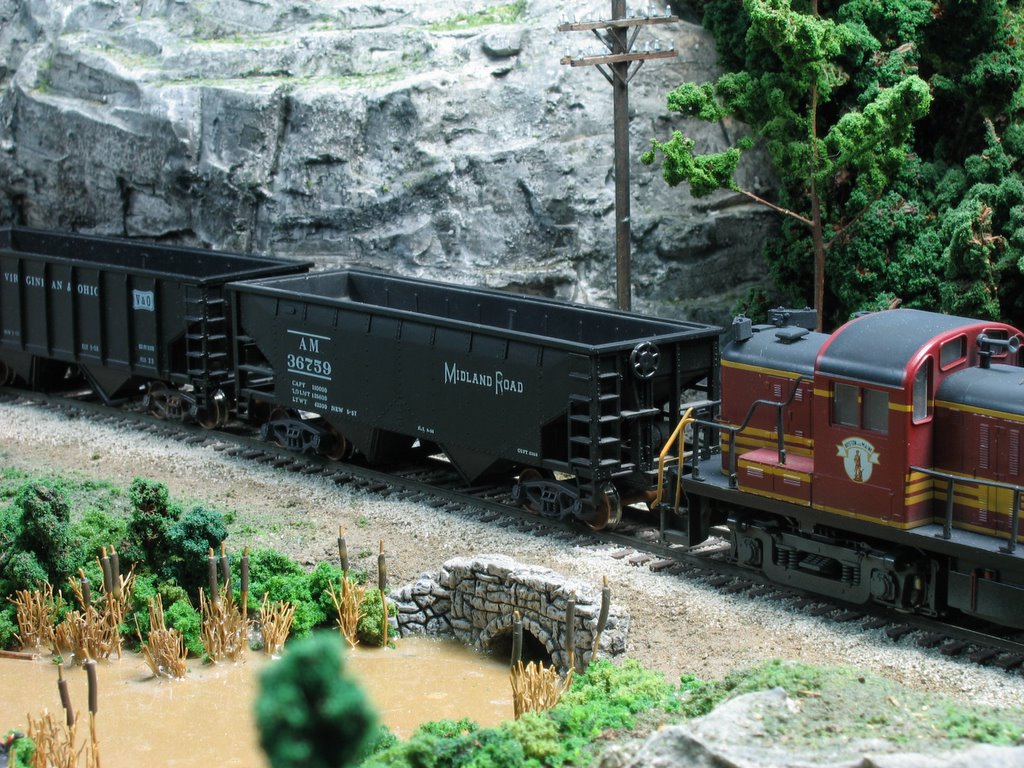
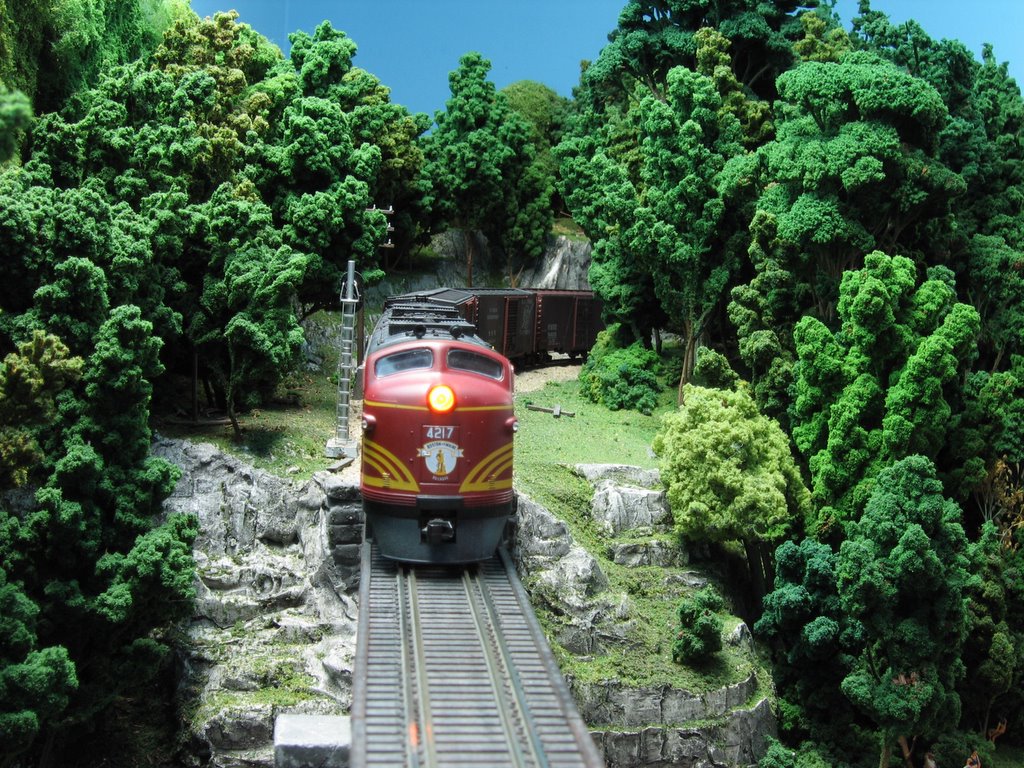
Yes, Mike just managed to make it to the inbound side of the New England River. He could hear the train whistle blow above the combined rumble of EMD and Alco units as the canyon walls reverberated at Haney Cut. Knowing that a slow order restriction was in effect at the bridge, he was able to set up his tripod in time to capture the three units assigned to this lengthy train, two GP7's and an RS3. Mike spotted fellow railfan, Bill Meek, on the other side of the river. "Good," thought Mike, "I got a shot of the units and hopefully Bill got a shot of the hoppers."
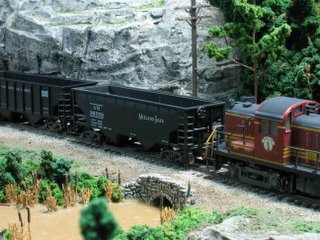 Hustling to put his equipment away, Hamer knew that he could make it to Marshall Cut in time for a second photograph as a slow order restriction would be in effect through the cut as well. After parking in the lot at Conley Lumber and Coal, he quickly climbed a small ridge in time to shoot the train as it exited the inbound gateway to Marshall Cut. He found it unusual to see the third locomotive in forward position rather than reversed as is normal practise. In his days of railfanning Mike has learned to expect the unexpected!
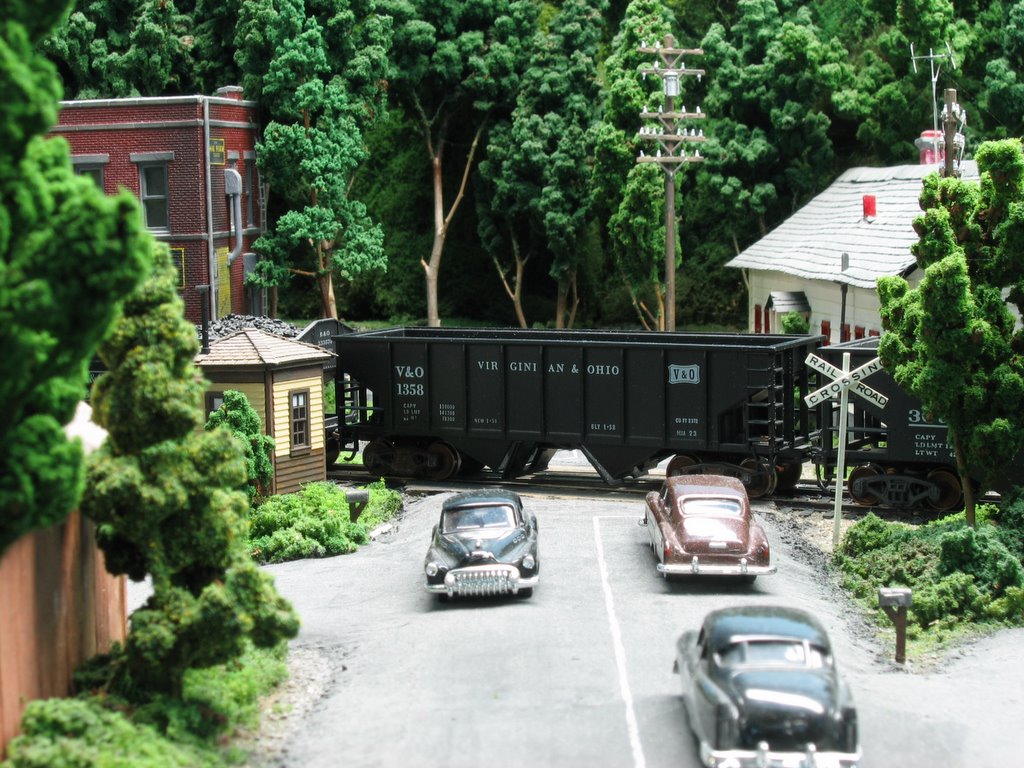
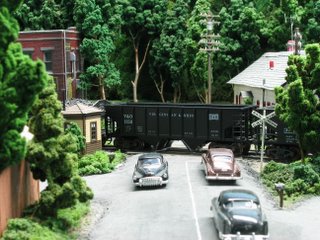 Meanwhile, Theo decided to drive out to Boundary Road to snap a shot before heading back to the station. Theo had eaten quite a hefty lunch and decided to wait it out in his car. He was startled to see the train arrive the crossing so quickly that he didn't have time to park his car and set up his equipment.
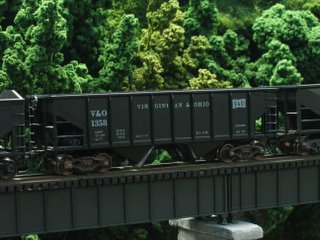
He managed to open his car door and put one foot on the asphalt and lens a picture of one of the desired hopper cars as the train crawled into yard limits across Boundary Road.
 After capturing the shot at Boundary Road, Theo turned his car around and headed back to the station where he knew the train would be kept busy conducting exchanges in North Dover. This would afford him ample time to shoot the hoppers and perhaps get a shot of the diesels before heading back home for lunch.
After parking his car, Theo walked behind the freight depot located across the team track from the station. He waited patiently for his shot while the drops and lifts were taking place. Shortly, Theo was rewarded with an image of both "targets" with the massive Phillips Furniture Factory acting as a backdrop.
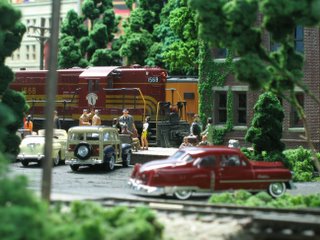 He then walked back across the parking lot where he took his final set of images capturing the lead unit, GP7 #1568 with its sister #1566 and RS3 #1519.
Later that afternoon, Theo, Bill and Mike gathered to discuss the photographs they had taken. All were pretty excited to get their rolls of film developed to place their images in their railfan scrapbooks.
Editor's note: The Midland Road car travelled all the way from Tony Koester's Alleghany Midland Railroad and the Virginian and Ohio made it to North Dover from Allan McLellan's V&O Railroad.
Cheers, Mike Hamer
Check out my other weblog which details my train operating round robin group at www.fridaynightgroup.blogspot.com
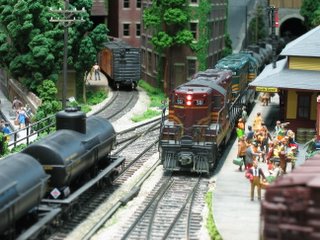 The Maine Central has been a railroad that has long intrigued me. The builders of this interesting transportation system faced many obstacles as they attempted to connect the remote areas of Maine to the rest of the world. When I think of the MEC in a geographical sense, I envision mountains, forests and rivers.
Indeed, Maine is a lumber state, dotted with countless papermills. This has enabled me the opportunity to run "unit trains" on my small, yet busy, 11x13 layout. Wanting to operate such a train of similar cars, I was faced with the choice of hauling either pulpwood or tanker traffic in long drags behind lashups of maroon & gold and green & gold Maine Central motive power. My decision was made easy when Proto2000 came out with their highly detailed tankcar kits. I chose to operate a unit tanker train which I have nicknamed, "The Oil Can". (Yes, I patiently constructed thirty of these kits - in an assembly line approach - to have sufficient cars for "the look" of a unit train and to have enough on the sidings in town for exchange purposes!)
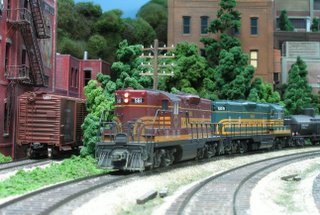 The Oil Can hauls empty tanker consists from the interior of Maine (where they fuelled the many paper mills) to my fictitious town of North Dover. The Maine Central is granted traffic rights in town where empties are exchanged for loads. In reality, the Maine Central conducted interchange with the Boston and Maine much further to the north. However, by naming my town North Dover (and not the real town of Dover), I provided myself with the opportunity to "imagineer" the exchange of traffic taking place further to the south.
The handsome EMD inspired livery of the Maine Central makes it a perfect cousin to the Boston and Maine as the photographs will attest!
I consider the Maine Central to be a survivor, and indeed it has to this day...as a major player in my model railroad world of New England.
Cheers, Mike Hamer
Check out my other weblog which details my train operating round robin group at www.fridaynightgroup.blogspot.com
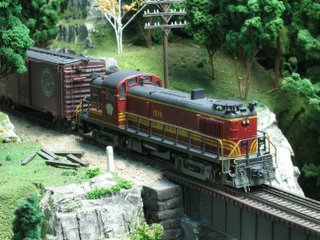 Many of my friends in Canada have asked how I became a fan of the Boston and Maine Railroad. The story begins back in 1996 when I first began the planning phase for my future railroad. My good friend, Trevor Marshall, was modelling the TH&B (Toronto, Hamilton and Buffalo) Railroad and I rather liked the appearance of his diesel locomotives in their cream and maroon livery. Trevor, sensing my interest in this handsome diesel paint scheme told me of a few (remotely) similar paint applications on other railroads...one being the B&M. I immediately recognized the beautiful Maroon and Deluxe Gold colours of the B&M diesels from my childhood days when my family would take camping trips from our home in Montreal to New England. The dye was cast!
I was rather new to model railroading at this time. Trevor loaned me some books focussing on railroading in the Northeast. I was hooked! My model railroad would depict the Boston and Maine as it existed when I was a child. I later chose to model a precise day, my date of birth...May 27th, 1958. This provided me with the liberty to run diesels in the earlier black scheme, the lovely maroon and gold scheme...and, if I wanted, the new McGinnis Bluebird livery.
So, there you have it. I certainly owe a great deal of gratitude to Trevor for leading me (astray) away from the typical, but n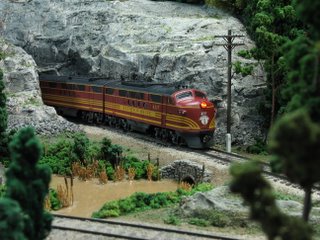 ice, paint schemes of the CN and CP railroads that most of my friends in Canada select for their choice for model railroad operations. Indeed, the pictures speak for themselves!
Editor's note: Trevor later sold all his TH&B equipment and went on to model the B&M in its steam days...so I wonder who influenced who?! Ahh, model railroading is fun!
Trevor's account of this story from way back in time is a little different..."Truth be told, Angus Palmer and I were already modelling the TH&B, and that was enough people in Ottawa for me. So I was hoping to suggest something else to throw you off the scent - I like being "different". Well, little did I know that in helping you define your layout, I'd say "heck, this is the railroad that I should be modelling!" 'course, this doesn't explain why I'm working in On2 now..."
 Ahh, how the passage of time changes our perspective on things!
Cheers, Mike Hamer
Check out my other weblog which details my train operating round robin group at http://www.fridaynightgroup.blogspot.com/
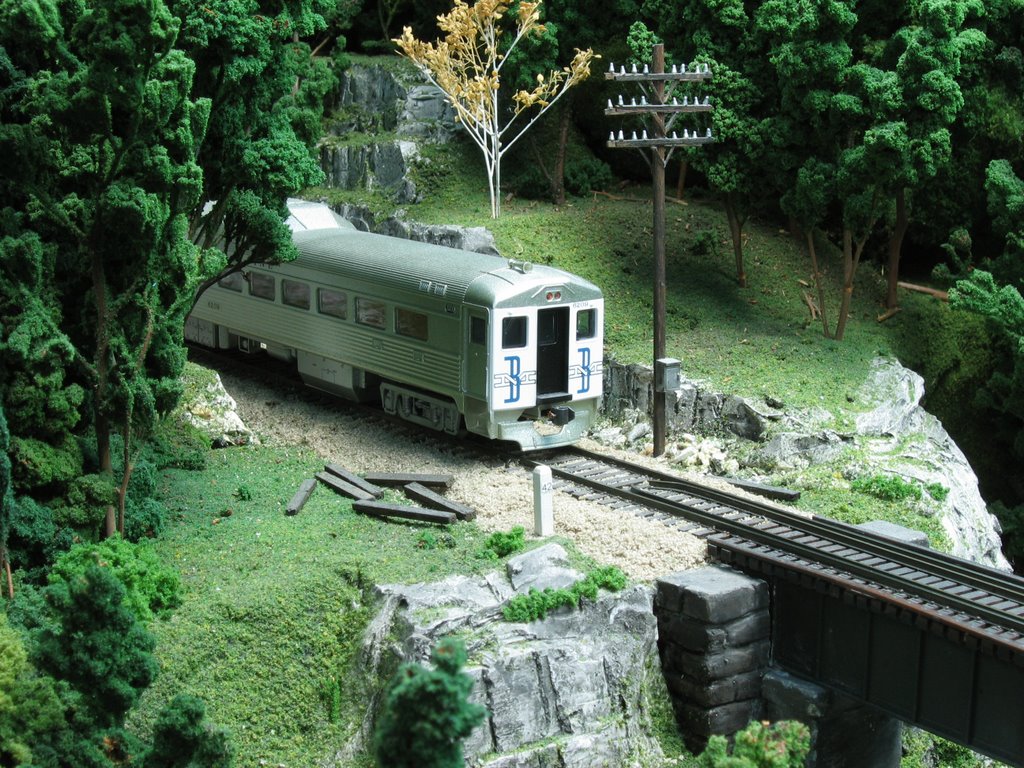 The first image showcases the northerly access area for inbound trains. This portal area to staging is effectively hidden behind a long rock cut and a large stand of trees. The trains enter the layout through Haney Cut and immediately traverse the New England River Bridge in the state of Maine. Today we see a B&M rail diesel car exiting the cut.
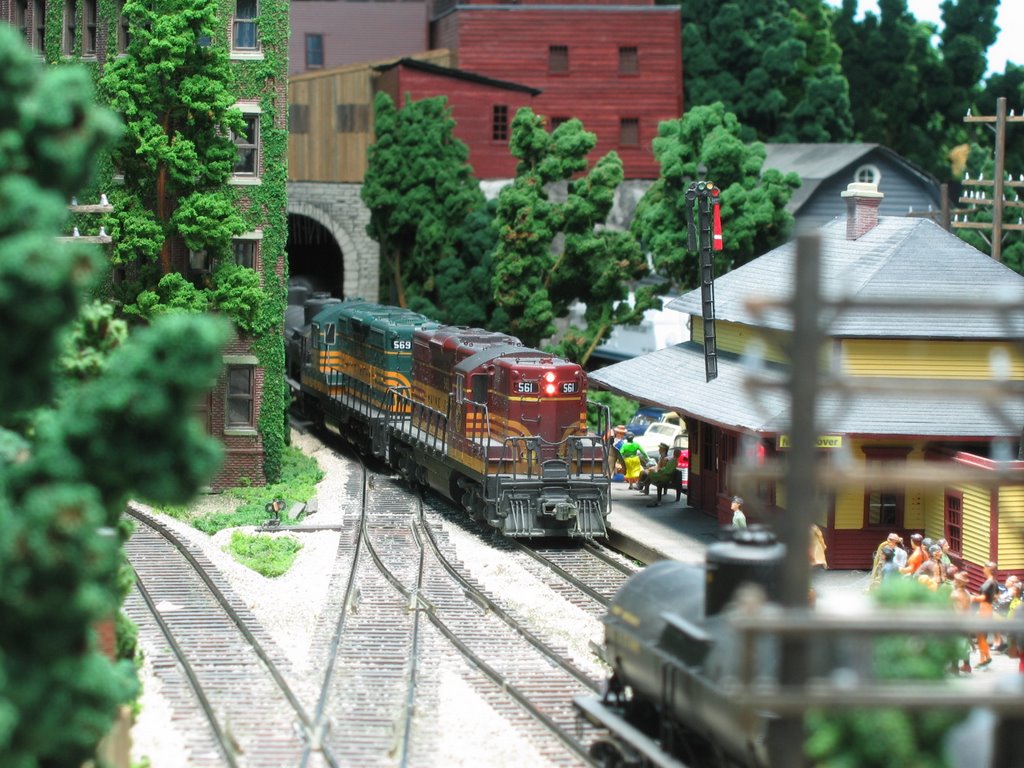 B&M tracks traverse the entire layout where they exit at the southerly portal, a tunnel located underneath the upper main street of North Dover. I call my town North Dover to give me artistic license to bring some of my favourite scenes from around New England to the layout, one of them being the famous tunnel at Bellows Falls. This scene is masked by a tall cliff, some buildings and a creamery located in the town. On this day we spot a Maine Central unit tank train exiting the tunnel in town. The MEC is granted trackage rights for a short portion of the B&M line through North Dover for interchange purposes.
 The Maine Central's sole independent access from staging takes place halfway around the layout at the Howard Street Overpass where a tower guards the interlocking. A combination of elements work here to mask the Maine Central's portal including the tower, the overpass and some groupings of trees.
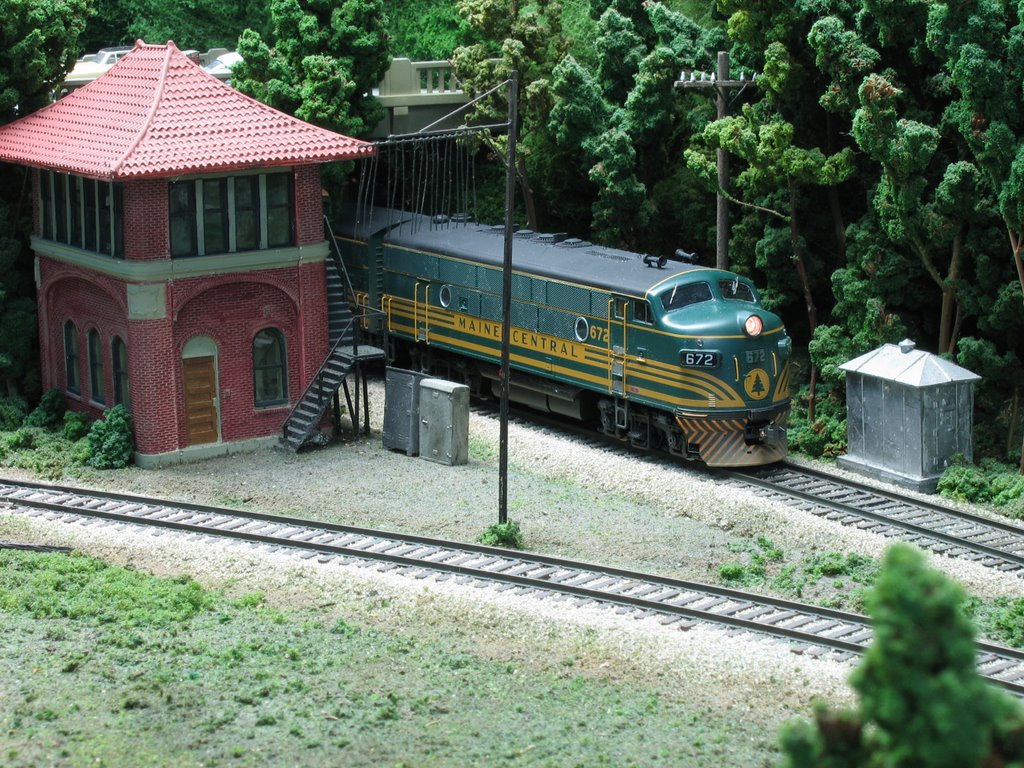 The image we see here is of B&M RS2 #1503 pulling a short local into town. The highway overpass certainly appears crowded today!